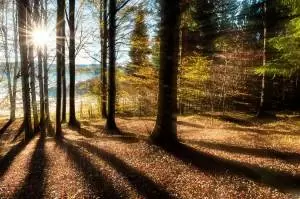
Foresters manage and protect forest ecosystems through conservation planning, timber management, fire suppression, and wildlife habitat preservation. They work for federal and state agencies, private timber companies, and consulting firms. Most forester positions require a bachelor's degree in forestry or related field, with federal foresters earning median salaries around $79,000 and the profession expected to grow 4% from 2022 to 2032.
If you're drawn to the outdoors and want a career protecting natural resources, forestry might be your calling. Foresters play a vital role in managing our nation's forests for future generations, balancing wilderness protection with timber needs, recreation, and wildlife habitat. Whether you envision yourself mapping remote wilderness areas, coordinating fire suppression teams, or developing sustainable timber plans, forestry offers diverse career paths that combine science, outdoor work, and environmental stewardship.
Let's explore what foresters actually do day-to-day, the education you'll need, realistic salary expectations, and how to break into this rewarding field.
What Do Foresters Do?
Foresters are the stewards of our forest ecosystems. On any given day, you might find a forester assessing timber stands for selective harvesting, coordinating with wildlife biologists to enhance habitat corridors, or meeting with citizen action groups about recreation access. The work blends outdoor fieldwork with scientific analysis, combining hands-on forestry with technologies such as GIS mapping and computer modeling.
The profession requires collaboration across multiple disciplines. You'll regularly work alongside professionals in entomology (to manage pest outbreaks), geology (for soil stability assessments), hydrology (to protect watersheds), and ecology (for ecosystem health monitoring). This interdisciplinary approach means foresters need both deep technical knowledge and strong communication skills.
Professional Forester Responsibilities
Professional foresters typically hold bachelor's or advanced degrees and manage complex, long-term forest plans. They may specialize in areas such as soil science, fire management, or pest control, or handle multiple responsibilities across a forest district. Here's what the work involves:
Conservation and Wilderness Protection: You'll develop strategies to preserve sensitive ecosystems, protect endangered species habitat, and maintain biodiversity. This might involve designating wilderness areas, establishing buffer zones around streams, or creating wildlife corridors that connect fragmented habitats.
Timber Management and Harvesting: Sustainable timber management is still a core forestry function. You'll mark trees for selective cutting, develop harvest schedules that maintain forest health, estimate timber volume and value, and ensure logging operations follow environmental regulations. The goal isn't just extraction—it's maintaining productive forests that can provide timber for decades to come.
Recreation and Public Access: Many foresters manage public lands where people camp, hike, and hunt. You'll plan trail systems, design campground layouts, manage visitor impacts, and balance recreation with resource protection. This work requires understanding both ecology and human behavior.
Fire Management: With wildfires increasing in frequency and intensity, fire management has become central to modern forestry. You'll conduct prescribed burns to reduce fuel loads, develop fire response plans, coordinate with firefighting teams, and help communities prepare for wildfire risk. This is particularly crucial in parts of California and other Western states where fire seasons have extended significantly in recent decades.
Tree Nursery Operations: Some foresters oversee nurseries that grow seedlings for reforestation projects. This involves selecting appropriate seed sources, managing growing conditions, and coordinating large-scale planting operations after fires or harvests.
Forestry Technician Roles
Forestry technicians are the implementation specialists who turn foresters' plans into reality. Many technician positions require two-year degrees or specialized training rather than four-year degrees, making this an accessible entry point to forestry careers. Technicians gain valuable field experience that can lead to professional forester roles with additional education.
As a forestry technician, you might spend your days on a fire suppression crew during fire season, constructing or maintaining miles of backcountry trails, or managing campground facilities while educating visitors about Leave No Trace principles. You'll monitor forest use to ensure compliance with regulations, conduct species inventories to track forest health, and collect data that informs management decisions.
Physical work is a big part of the job. Technicians plant trees and shrubs to stabilize eroding soils, mark timber stands for cutting or preservation, and maintain the equipment and infrastructure that keeps forest operations running. It's demanding work that keeps you outdoors in all weather conditions, but many foresters say their technician years provided the best hands-on training for understanding how forests actually function.
Where Does a Forester Work?
Foresters spend most of their time outdoors—that's the appeal for most people in this profession. You'll hike through remote wilderness areas assessing forest health, survey timber stands in varied terrain, monitor wildlife habitat, and oversee field operations in all weather conditions. Researchers and educators spend more time in labs and classrooms, but even they conduct regular fieldwork.
The amount of human interaction varies significantly by role. If you're based in backcountry wilderness areas, you might go days without seeing anyone outside your crew. But if you work in recreation management, fire suppression, or education, you'll interact with the public, landowners, and other agencies daily. Many foresters appreciate this balance—solitary fieldwork, collaborative planning, and community engagement.
Major Employers of Foresters
The USDA Forest Service is the single largest employer of foresters, with over 30,000 employees across hundreds of locations nationwide (including permanent, temporary, and seasonal positions). Forest Service foresters work in forest and range research, advise state and private partners on best practices, and manage the 193 million acres of national forests and grasslands. If you're drawn to public service and large-scale conservation work, the Forest Service offers clear advancement paths and geographic diversity.
State forestry agencies are also major employers. Every state has a forestry division that manages state forests, provides wildfire protection, and assists private landowners. State positions often offer work similar to federal roles, but with a greater focus on local issues and closer ties to communities. The work can be just as rewarding with slightly different bureaucratic structures.
Private industry also employs many foresters. Forest consulting firms advise private landowners on timber management, conservation easements, and tax strategies. Timberland management companies oversee vast private forests for investment firms. Lumber companies employ foresters to ensure sustainable harvests and maintain forest productivity. Private sector roles often pay competitively and can offer faster advancement than government positions.
Conservation organizations like The Nature Conservancy employ foresters to manage preserves and develop science-based conservation strategies. Universities and research institutions hire foresters for teaching and research. There's also growing investment in urban forestry programs where foresters manage city trees and green spaces—a specialization we'll discuss more below.
The distinction between foresters and forest rangers often confuses people. While foresters focus on forest management and scientific planning, forest rangers typically work more directly with public recreation, education, and law enforcement on public lands. The roles overlap but have different emphases.
Where the Jobs Are
Forestry employment concentrates in regions with extensive forest resources. The West Coast states—California, Oregon, Washington, and Idaho—employ the largest numbers of foresters, driven by vast federal lands and active timber industries. The Pacific Northwest, in particular, has deep roots in forestry and strong forestry programs.
The Great Lakes region, especially Minnesota and Wisconsin, has significant employment in forestry due to both public lands and private timber operations. The Southeast—Florida, Alabama, North Carolina, and Virginia—combines federal forests with extensive private timberlands managed for pulp and paper production. Pennsylvania also employs a substantial number of foresters who manage both state forests and private holdings.
These geographic patterns matter for job hunting. If you're committed to forestry, you may need to relocate to regions with forest resources. While some planning and data analysis work can be done remotely, the core job requires physically walking through forest stands and conducting fieldwork.
What Is a Typical Forester's Salary?
According to the Bureau of Labor Statistics, foresters and conservation scientists earned a median annual wage of $64,420 as of May 2023. Foresters working for the federal government earned higher median salaries of approximately $78,960. These figures represent national medians—actual salaries vary significantly by experience level, employer, specialization, and geographic location.
Entry-level foresters starting at GS-5 or GS-7 federal positions typically earn $40,000-$50,000. With a few years of experience and advancement to GS-9 positions, salaries generally range from $55,000 to $70,000. Senior foresters with specialized expertise or supervisory roles often earn $75,000-$95,000 or more.
| Career Stage | Typical Salary Range | Experience Level |
|---|---|---|
| Entry-Level Forester | $40,000 - $50,000 | 0-2 years, Bachelor's degree |
| Mid-Career Forester | $55,000 - $70,000 | 3-7 years, field experience |
| Senior Forester | $75,000 - $95,000+ | 8+ years, specialized expertise or management |
Private-sector salaries can exceed those in government positions, particularly for experienced foresters with in-demand specializations such as GIS analysis or carbon sequestration planning. Private consulting foresters with established client bases may see higher compensation, though these figures vary widely by market and specialization.
Geographic Salary Variations
Location significantly impacts forester salaries. West Coast positions typically pay more due to higher costs of living and competitive job markets, with California foresters often earning 20-30% above the national median. Alaska positions may include locality pay adjustments and housing allowances that boost total compensation.
Southeastern states tend to pay slightly below the national median, despite high levels of forestry employment, reflecting the lower cost of living. However, the difference is often offset by housing affordability and lower taxes. When evaluating offers, consider total compensation, including benefits, retirement contributions, and cost of living, rather than salary alone.
Career Path and Advancement
Understanding the career trajectory of a forester helps you set realistic expectations and plan your professional development. Most foresters follow a fairly predictable path, though advancement speed varies by performance, additional training, and opportunities.
Years 0-2 (Entry-Level): You'll likely start in a developmental or trainee position, often at the GS-5 or GS-7 level in federal service. Expect to spend significant time in the field learning forest inventory techniques, assisting with timber cruises, supporting senior foresters on projects, and building practical skills. This is your apprenticeship period—absorb everything you can from experienced professionals.
Years 3-7 (Professional Forester): With a solid foundation, you'll take on independent projects and greater responsibility. This might mean managing specific forest units, leading timber sale preparations, coordinating with contractors, or specializing in areas like GIS analysis or fire management. Many foresters advance to GS-9 or GS-11 positions during this period. This is when you develop your professional identity and decide if you want to specialize or pursue management.
Years 8+ (Senior/Supervisory Roles): Senior foresters lead teams, oversee large districts, represent their agency in high-level planning, and mentor junior staff. You might manage budgets, coordinate multi-year projects, and work on policy development. Some senior foresters specialize deeply in technical areas such as silviculture research or become administrators who manage entire forests or regions.
| Position Level | Years Experience | Key Responsibilities | Federal GS Level |
|---|---|---|---|
| Forestry Technician | 0-3 years | Field data collection, implementation support, trail maintenance | GS-3 to GS-5 |
| Entry-Level Forester | 0-2 years | Timber cruising, inventory work, project assistance | GS-5 to GS-7 |
| Forester | 3-7 years | Independent projects, unit management, specialized work | GS-9 to GS-11 |
| Senior Forester | 8-15 years | Team leadership, district oversight, policy input | GS-12 to GS-13 |
| Forest Supervisor | 15+ years | Multi-district management, strategic planning, administration | GS-14 to GS-15 |
Essential Skills for Foresters
Success in forestry requires a combination of technical expertise, physical capability, and interpersonal skills. Here's what you'll need to develop:
Technical Skills
GIS and Remote Sensing: Geographic Information Systems and GPS technology are fundamental to modern forestry. You'll use GIS to create maps, analyze landscape patterns, track timber inventories, and model forest changes over time. Remote sensing helps you assess forest conditions across large areas without physically visiting every acre. These skills are increasingly essential—many programs now require GIS coursework for a reason.
If you're interested in developing strong geospatial skills, consider a GIS degree or certificate program to complement your forestry education. This combination makes you highly marketable.
Data Analysis and Modeling: Foresters work with substantial datasets, including tree measurements, growth rates, habitat assessments, and climate projections. You'll need comfort with statistical software, spreadsheet analysis, and computer modeling tools that predict forest growth and wildfire behavior. Strong quantitative skills separate good foresters from great ones.
Silviculture and Ecology: Understanding how forests grow, reproduce, and respond to disturbances is fundamental. You need to know the characteristics of tree species, growth patterns, ecological succession, and how different management approaches affect forest development. This knowledge base takes years to build and requires both classroom learning and field observation.
Forest Inventory Techniques: Accurately measuring and assessing forest stands is core work in forestry. You'll learn how to estimate timber volumes, assess tree health, classify forest types, and document forest conditions following standardized protocols. Precision matters—timber sale valuations and management decisions depend on your measurements.
Interpersonal and Leadership Skills
Communication: You'll regularly explain complex forestry concepts to landowners who don't have technical backgrounds, present management plans to skeptical community members, write reports for administrators, and coordinate with contractors. Strong written and verbal communication skills are essential. The best scientific forestry plan fails if you can't build support for implementation.
Stakeholder Engagement: Modern forestry involves balancing competing interests—timber production, recreation, wildlife habitat, watershed protection, and climate mitigation. You'll facilitate meetings with diverse stakeholders, navigate conflicts between user groups, and find solutions that serve multiple objectives. Patience, empathy, and negotiation skills matter as much as technical knowledge.
Problem-Solving: Every forest presents unique challenges—pest outbreaks, post-fire rehabilitation, drought stress, and invasive species. You'll need to analyze complex situations, consider multiple factors, weigh tradeoffs, and develop practical solutions with limited budgets and staff. Creativity and adaptability are valuable traits.
Leadership: Even early-career foresters often supervise seasonal technicians or contractor crews. As you advance, you'll lead project teams, manage staff, and coordinate across agencies. Leadership skills develop with practice, but you'll need to start building them early.
Physical and Practical Skills
Outdoor Fitness: Forestry is physically demanding. You'll hike steep terrain carrying equipment, work in extreme temperatures, handle chainsaws and other tools safely, and maintain stamina through long field days. You don't need to be an ultramarathoner, but reasonable fitness makes the job far more enjoyable and sustainable.
Navigation: GPS is helpful, but you need to read topographic maps, use a compass, and navigate safely in remote areas where technology might fail. Spatial awareness and orientation skills keep you safe in the backcountry.
Tool Proficiency: Depending on your role, you'll use specialized forestry equipment—increment borers for aging trees, clinometers for height measurement, relascopes for stand density, and various sampling tools. Many foresters are also trained in chainsaw operation and know basic equipment maintenance.
Forestry Specializations
As you advance in your career, you'll likely develop expertise in particular aspects of forestry. Understanding these specializations helps you identify career directions that align with your interests:
Fire Management: With climate change intensifying wildfire seasons, fire management specialists are in high demand. This work includes developing prescribed burn plans, coordinating fire suppression efforts, assessing fuel loads, creating defensible space around communities, and helping forests adapt to increased fire risk. It's high-stakes work that combines science, logistics, and crisis management.
Urban Forestry: Urban foresters manage trees in cities and towns, developing plans for street tree plantings, maintaining park forests, assessing tree health and hazards, and balancing urban development with green infrastructure. This specialization requires understanding both traditional forestry and urban planning, with a focus on how trees improve air quality, reduce heat islands, and enhance community livability. Cities are increasingly investing in urban forestry programs, creating new career opportunities.
Forest Health and Pest Management: Specialists in this area monitor for disease outbreaks, identify pest threats, develop integrated pest management strategies, and coordinate responses to invasive species. With pests like the emerald ash borer and the hemlock woolly adelgid devastating forests, this work is increasingly critical. You'll work closely with entomologists and plant pathologists.
Timber Management: This traditional forestry specialization focuses on sustainable timber production—marking timber sales, planning harvest rotations, regenerating forests post-harvest, and maximizing timber value while maintaining ecosystem health. It requires deep knowledge of market dynamics, silviculture, and balancing economic and ecological objectives.
Recreation Planning: Recreation specialists design trail systems, manage campgrounds and visitor facilities, balance recreation impacts with resource protection, and work extensively with the public. If you enjoy the people side of forestry and want to help others connect with nature, this specialization offers rewarding work.
Forest Ecology and Research: Research foresters conduct studies on forest dynamics, test management approaches, model the impacts of climate change, and develop science-based management guidelines. This path typically requires an advanced degree but offers opportunities to contribute fundamental knowledge that shapes forestry practices.
Carbon Forestry and Climate Mitigation: This developing specialization focuses on managing forests for carbon sequestration, developing carbon offset projects, measuring carbon stocks, and helping forests adapt to climate change. As markets for ecosystem services expand, foresters with carbon expertise are increasingly valuable, though salary ranges vary significantly depending on employer and project type.
What Is the Job Demand for Foresters?
According to the Bureau of Labor Statistics, employment of conservation scientists and foresters is projected to grow 4 percent from 2022 to 2032, which is slower than the average for all occupations. Despite modest overall growth projections, the profession expects several thousand openings annually as workers transfer to other occupations or retire from the labor force.
Several factors support continued forestry employment. Climate change is intensifying forest management challenges—more severe wildfires, shifting species ranges, increased pest outbreaks, and drought stress. These challenges continue to demand skilled foresters who can help forests adapt. Growing interest in forest carbon markets and ecosystem services creates career opportunities in emerging specializations. Cities are expanding urban forestry programs as they recognize the value of tree canopy for climate resilience and quality of life.
However, federal hiring can fluctuate with budget priorities and administration changes. State and private sector opportunities may offer more stability. Geographic flexibility improves your job prospects—if you're willing to relocate to regions with significant forest resources, you'll find work. Competition for positions in highly desirable locations (near national parks, major cities, or popular recreation areas) can be intense.
The profession also faces a demographic shift. Many experienced foresters hired in the 1970s and 1980s are approaching retirement, creating advancement opportunities for mid-career professionals and openings for new graduates. If you're entering forestry now, you're joining at a time when the profession needs fresh perspectives on how to manage forests facing unprecedented challenges.
What Are Education Requirements for Foresters?
Professional forestry positions generally require a bachelor's degree. You can't just love trees and get hired—forestry is a science-based profession that demands formal education in biology, ecology, silviculture, and resource management. Here's what you need to know about educational pathways:
Bachelor's Degree in Forestry
A four-year forestry degree is the standard pathway to professional forester positions. Look for programs accredited by the Society of American Foresters (SAF)—accreditation ensures your degree meets professional standards and makes you eligible for certain certifications and federal positions. You can find current SAF-accredited programs through their website at eforester.org.
Forestry programs combine foundational sciences with specialized forestry courses. You'll take classes in biology, chemistry, physics, and mathematics to build your scientific foundation. Core forestry courses cover silviculture (forest cultivation), forest ecology, forest measurements and inventory, wildlife management, soil science, forest economics, and forest policy and law. Most programs also include substantial coursework in GIS and remote sensing—these technologies are now central to forestry work.
Expect plenty of fieldwork. Quality forestry programs include field camps or practicums where you practice timber cruising, identify tree species, use forestry equipment, and apply classroom concepts in real forests. These experiences are often students' favorite parts of their education and provide skills you'll use throughout your career.
Alternative Degree Paths
While forestry degrees are most common, related degrees can also lead to forestry careers, particularly if you focus your coursework appropriately and gain relevant experience. Environmental biology degrees with ecology emphasis, fish and wildlife management degrees, and environmental science degrees can position you for forestry work, though you may need to supplement with forestry-specific coursework.
Some people enter forestry through conservation or natural resource management programs. The key is gaining the technical skills—GIS, forest inventory, and silviculture knowledge—that foresters need. If you're pursuing a non-forestry degree but want forestry career options, seek internships with the Forest Service or state forestry agencies to build relevant experience.
Forestry Technician Pathway
Many forest technician positions require a two-year associate's degree from a technical college recognized by SAF rather than a bachelor's degree. This is an accessible entry point if you're eager to start working and aren't ready to commit to four years of university. Technical programs focus heavily on field skills—you'll learn hands-on forest inventory techniques, GPS and GIS basics, chainsaw certification, and practical forest management.
Importantly, starting as a technician doesn't mean you're stuck there. Many foresters begin as technicians, work for a few years while earning their bachelor's degree part-time, and then transition to professional forester roles. The Forest Service and many state agencies have clear pathways for technicians to advance as they complete additional education. This earn-while-you-learn approach can make forestry accessible for people who can't afford or don't want to commit to four years of full-time university immediately.
Some Forest Service technical positions don't require college degrees, offering opportunities for advancement based on experience and on-the-job training. However, a degree significantly expands your potential for advancement and salary ceiling.
Graduate Degrees for Research and Specialization
Master's or Ph.D. degrees are required for research forester positions and can help you stand out for competitive jobs or advancement to senior roles. A master's degree typically takes 2 years beyond your bachelor's and allows you to develop specialized expertise—forest ecology, fire science, silviculture, forest economics, or other focus areas.
Ph.D. programs (4-6 years beyond bachelor's) prepare you for research positions, university teaching, or high-level policy roles. If you're passionate about understanding fundamental forest processes or shaping forestry science, a doctorate opens those doors. However, most practicing foresters don't need graduate degrees—they're beneficial for specific career paths, not universal requirements.
Federal Employment Qualifications
The USDA Forest Service typically hires college graduates at the GS-5 or GS-7 grade level, depending on your degree and qualifications. With just a bachelor's degree, you'll likely start at GS-5. If you have a higher GPA, a graduate degree, or relevant experience, you might qualify for GS-7 entry. After a year or two gaining experience in developmental positions, you're typically eligible for promotion to GS-9, where you take on greater responsibility and independence.
Understanding federal qualification requirements helps you plan your education strategically. Pay attention to specific course requirements in job announcements—the Forest Service looks for particular combinations of biology, forestry, and natural resource courses when screening applications.
Licensing and Certification
Forester licensing requirements vary significantly by state. Some states, like California, Maine, and South Carolina, require professional licensure to practice forestry, while others don't have mandatory licensure. Licensing typically requires passing an exam after gaining work experience, similar to engineering licensure. Check your target state's specific requirements early in your education by consulting the Society of American Foresters' state-by-state guide or your state forestry agency.
Voluntary professional certification is available through the Society of American Foresters. Becoming a Certified Forester (CF) demonstrates your competence and commitment to professional standards. While not required for most jobs, certification can help you stand out in competitive job markets and is respected throughout the profession.
Degrees Related to Forestry
Current Trends Shaping Forestry Careers
Forestry is evolving rapidly in response to climate change, technological advances, and shifting societal priorities. Understanding these trends helps you prepare for the profession you're actually entering, not the forestry of decades past:
Climate Change Adaptation: Climate change is fundamentally altering forestry work. You'll deal with more severe droughts, shifting species ranges as trees' suitable habitats move north and upslope, increased pest outbreaks as warmer winters allow insects to survive, and extreme weather events that damage forests. Modern foresters need to think beyond traditional silviculture to help forests adapt—planting drought-tolerant species mixes, creating climate refugia, and managing for resilience rather than maximizing timber volume.
Wildfire Management Evolution: The era of total fire suppression is over. Modern fire management recognizes that fire is a natural forest process and that a century of suppression created dangerous fuel loads. You'll work with prescribed fire as a management tool, help communities adapt to living with wildfire, and restore fire to ecosystems that evolved with it. This shift requires foresters who understand fire ecology, can communicate the role of fire to worried communities, and can manage complexity and uncertainty.
Technology Integration: Drones with lidar sensors create detailed 3D forest maps. Satellite imagery tracks forest changes in near-real-time. AI and machine learning analyze vast datasets to predict bark beetle outbreaks or optimal thinning strategies. Remote sensing lets you assess forest conditions across millions of acres. Today's foresters need to be comfortable with technology while maintaining hands-on field skills. The future likely involves even more automation—imagine drones conducting timber cruises or AI optimizing harvest plans.
Carbon Forestry and Ecosystem Services: Forests are increasingly recognized for their carbon sequestration value, water filtration, biodiversity support, and recreation benefits beyond just timber. Carbon markets are developing, allowing forest owners to sell carbon credits from improved forest management. This creates opportunities for foresters who understand carbon accounting, offset protocols, and how to optimize forests for multiple services. If you're interested in the economics side of forestry, this is a developing field with growing potential.
Urban Forestry Expansion: As cities recognize that trees are critical infrastructure for climate resilience, air quality, and public health, urban forestry programs are receiving increased attention and investment. This specialization combines traditional forestry with urban planning, arboriculture, and community engagement. You might manage city tree inventories, develop urban forest plans, or oversee street tree planting programs. It's forestry for people who want to work where people are, not just remote wilderness.
Traditional Ecological Knowledge Integration: There's growing recognition that Indigenous peoples managed North American forests successfully for millennia before European colonization. Modern forestry is beginning to integrate traditional ecological knowledge alongside Western science. You might work with tribal forestry programs, learn traditional burning practices, or incorporate Indigenous perspectives into management plans. This cultural evolution enriches forestry and improves outcomes.
Work Environment and Lifestyle
Before committing to forestry, understand the practical realities of the lifestyle:
Field vs. Office Time: Most foresters split time between fieldwork and office work, though the ratio varies by position and season. You might spend 50-70% of your time outdoors during spring through fall field seasons, then shift to more office time during winter for planning, data analysis, and report writing. Some foresters love this variation—outdoor work when the weather's good, warm office work when it's not. Others prefer roles that keep them primarily in one setting or the other.
Seasonal Patterns: Forestry work follows natural cycles. Spring and summer are intense field seasons for timber cruising, prescribed burning (in appropriate conditions), and recreation management. Fall often involves timber sale preparation and habitat assessments while conditions are still good. Winter is the primary planning season, with more office time for data analysis, management plan writing, and preparing next year's projects. Fire season increasingly dominates summer schedules, particularly in Western states.
Physical Demands: Be honest with yourself about physical requirements. You'll hike steep terrain, work in heat and cold, carry equipment, and stay active all day. Some foresters work into their 60s and 70s because they maintain fitness and love the outdoor lifestyle. Others transition to more administrative roles as they age or if injuries accumulate. It's demanding work, but many people find physical outdoor work deeply satisfying compared to desk jobs.
Remote Locations and Travel: Many forestry positions are in rural areas near forest resources rather than in major cities. You might live in small mountain towns, rural communities, or areas with limited amenities. Some people thrive in close-knit rural communities with immediate access to outdoor recreation. Others find rural living isolating and miss urban cultural opportunities. Consider what lifestyle actually fits you—the job won't be rewarding if you're miserable where you live.
Travel requirements vary by position. Some foresters work within a defined district they can drive home nightly. Others cover large regions requiring frequent overnight travel. Fire assignments can take you across the country for weeks at a time. District rangers might be on-call for emergencies. While core fieldwork requires physical presence, some planning and data analysis tasks can be done remotely depending on your employer's policies. Understand work location expectations before accepting positions, especially if you have family or lifestyle commitments.
Work-Life Balance: Government forestry positions typically offer good work-life balance with defined hours, though peak seasons and emergencies (such as wildfires) may require long hours. Private-sector positions may have less predictable schedules and greater pressure to meet client deadlines or production targets. Overall, forestry offers a reasonable balance compared to many professional careers, but it's not a 9-to-5 desk job either.
Forester vs. Forest Ranger vs. Wildlife Biologist
People often confuse these three careers because they all involve outdoor work with natural resources. Here's how they actually differ:
| Aspect | Forester | Forest Ranger | Wildlife Biologist |
|---|---|---|---|
| Primary Focus | Forest management, timber, conservation planning | Public interaction, education, law enforcement, recreation | Animal populations, habitat, species research |
| Typical Employer | USDA Forest Service, state forestry, private timber companies | National Park Service, state parks, Forest Service | U.S. Fish & Wildlife Service, state wildlife agencies, NGOs |
| Education Required | Bachelor's in forestry or related field | Bachelor's in natural resources, recreation, or law enforcement | Bachelor's in wildlife biology, ecology, or biology |
| Daily Activities | Timber cruising, GIS mapping, harvest planning, silviculture | Visitor services, trail patrol, permits, emergency response | Population surveys, habitat assessments, research, monitoring |
| Public Interaction | Moderate (stakeholder meetings, public planning) | High (daily visitor contact, education programs) | Low to moderate (depends on role) |
| Law Enforcement | Generally no (some regulatory compliance) | Yes (many rangers have law enforcement authority) | No (except game wardens/conservation officers) |
| Median Salary | $64,420 (2023 BLS data) | Varies widely by agency and location | $66,350 (verify current data) |
All three careers involve outdoor work and resource protection, but the day-to-day reality differs significantly. Foresters are primarily focused on trees and forest ecosystems. Forest rangers work more with people than trees. Wildlife biologists focus specifically on animal populations and habitat. Understanding these distinctions helps you choose the path that matches your actual interests.
What Kind of Societies and Professional Organizations Do Foresters Have?
Professional organizations provide networking, continuing education, and advocacy for the forestry profession:
Founded in 1900 by Gifford Pinchot, The Society of American Foresters (SAF) (http://www.eforester.org/) is the most prominent professional association for foresters in the world. The society advances the practice of forestry through publications, conferences, and educational programs. It provides information and networking opportunities to foresters and natural resource professionals at all career stages. SAF also accredits forestry degree programs and offers professional certification.
Joining SAF as a student member is worthwhile—you'll access career resources, attend conferences at reduced rates, and start building professional connections before you even graduate. The society publishes several journals, including the Journal of Forestry, which keeps you current on research and practice developments.
The National Association of State Foresters (NASF) (http://www.stateforesters.org/) is a non-profit organization for the directors of forestry agencies throughout the United States. While not a typical professional membership organization for individual foresters, NASF plays an important role in coordinating state forestry programs and advocating for state forestry funding and priorities at the national level.
Many foresters also belong to region-specific organizations like the Western Forestry and Conservation Association or state-level forestry associations. These groups focus on regional forestry issues and provide local networking opportunities. If you're interested in specific specializations, consider joining groups like the Association for Fire Ecology, the International Society of Arboriculture (for urban foresters), or the Forest Stewardship Council.
Frequently Asked Questions
What is a forester?
A forester is a natural resource professional who manages and protects forest ecosystems. Foresters develop plans for timber harvesting, wilderness protection, habitat enhancement, fire management, and recreation. They work for federal and state agencies, private timber companies, consulting firms, and conservation organizations. The job combines scientific knowledge with practical fieldwork, using technologies such as GIS while spending substantial time outdoors assessing forest conditions.
What does a forester do on a daily basis?
A forester's daily activities vary by season and specialization. Typical work includes hiking through forest stands to assess tree health and growth, using GPS and GIS to map forest conditions, meeting with landowners or stakeholders about management plans, marking trees for harvest or preservation, coordinating with contractors on timber sales or restoration projects, analyzing data and writing reports, and responding to emerging issues like pest outbreaks or fire threats. Some days are spent entirely outdoors doing fieldwork, while others involve office work on planning and analysis.
How much do foresters make?
Foresters and conservation scientists earned a median annual wage of $64,420 as of May 2023, according to the Bureau of Labor Statistics. Federal government foresters earned higher median salaries of approximately $78,960 during this period. Entry-level foresters typically earn $40,000-$50,000, mid-career professionals earn $55,000-$70,000, and senior foresters with specialized expertise often earn $75,000-$95,000 or more. Private sector foresters and consultants may earn higher salaries depending on their specialization and client base. Salary varies significantly by location, employer, experience level, and specialization.
What degree do you need to become a forester?
Most professional forester positions require a bachelor's degree in forestry or a closely related field, such as natural resource management or environmental science. Look for programs accredited by the Society of American Foresters (SAF) to ensure your degree meets professional standards. Forestry programs include coursework in biology, chemistry, silviculture, forest ecology, GIS and remote sensing, wildlife management, and forest policy. Many programs include field camps where you practice timber cruising and forest inventory techniques. Forestry technician positions may require only a two-year associate degree, while research positions typically require master's or Ph.D. degrees.
How long does it take to become a forester?
Earning a bachelor's degree in forestry takes four years of full-time study. After graduation, you'll typically start in entry-level or developmental positions (GS-5 or GS-7 in federal service) where you gain practical experience for 1-2 years before advancing to independent professional forester roles. So, from starting college to becoming a fully functioning professional forester takes about 5-6 years total. If you pursue a master's degree for research or specialized roles, add 2 more years. Some people start as forestry technicians with two-year degrees, work for several years, then complete bachelor's degrees part-time—this earn-while-you-learn pathway takes longer but avoids student debt.
What's the difference between a forester and a forest ranger?
Foresters focus primarily on forest management—planning timber harvests, protecting forest health, enhancing wildlife habitat, and developing long-term management strategies. They work extensively with GIS, conduct forest inventories, and make scientific decisions about forest treatments. Forest rangers typically work more directly with the public on recreation management, education, and, at times, law enforcement. Rangers patrol trails, manage campgrounds, issue permits, and ensure visitor compliance with regulations. While both careers involve outdoor work on public lands, foresters focus more on the forest ecosystem itself, while rangers focus more on people using those lands. Many people who work in the Forest Service use the title "ranger" (such as district rangers), even though they have forestry degrees and do forestry work—the terminology can be confusing.
What is the job outlook for foresters?
Employment of conservation scientists and foresters is projected to grow 4 percent from 2022 to 2032, which is slower than the average for all occupations, according to the Bureau of Labor Statistics. Despite modest overall growth, the profession expects several thousand openings annually as workers transfer to other occupations or retire. Several factors support continued demand, including climate change intensifying forest management challenges, growing interest in forest carbon markets, expansion of urban forestry programs, and retirement of experienced foresters hired in the 1970s-1980s. However, federal hiring fluctuates with budget priorities, and competition for desirable locations can be intense. Geographic flexibility significantly improves job prospects.
Key Takeaways
- Forest Stewardship Role: Foresters manage forest ecosystems by balancing timber production, wilderness protection, wildlife habitat, recreation, and fire management through science-based planning and fieldwork.
- Bachelor's Degree Required: Professional forester positions require a four-year degree in forestry or a related field, preferably from a Society of American Foresters (SAF) accredited program, with strong emphasis on GIS and field skills.
- Competitive Salaries with Modest Growth: Foresters earn a median wage of $64,420 (2023), with federal positions averaging $78,960. Entry-level foresters earn $40,000-$50,000, mid-career $55,000-$70,000, and senior foresters $75,000-$95,000+. Job growth is projected at 4% from 2022 to 2032.
- Diverse Career Paths Available: Specialization options include fire management, urban forestry, forest health, timber management, recreation planning, research, and emerging carbon forestry roles responding to climate change.
- Physical Outdoor Work: Forestry involves substantial fieldwork, including hiking steep terrain in all weather conditions, and requires physical fitness and comfort with remote locations, though roles balance field time with office-based planning and analysis.
- Technology Skills Essential: Modern foresters must be proficient in GIS mapping, remote sensing, GPS navigation, data analysis, and computer modeling alongside traditional forestry knowledge and field skills.
- Climate Change Reshaping Profession: Today's foresters face challenges from increased wildfires, shifting species ranges, and climate adaptation needs, making forestry an evolving profession addressing critical environmental issues.
Ready to start your forestry career? Explore accredited forestry degree programs and discover how you can contribute to sustainable forest management for future generations.
2023 US Bureau of Labor Statistics salary and job growth figures for conservation scientists and foresters reflect national data, not school-specific information. Conditions in your area may vary. Data accessed January 2026.